
Can a durable fast food cup reduce waste and costs?
Against the backdrop of over 250 billion disposable cups consumed globally each year, a durable fast food cup design can reduce waste generation by up to 70%. According to a 2024 study by the European Packaging Association, increasing the thickness of the cup wall from 0.2 millimeters to 0.35 millimeters can enhance the compressive strength by 50% and extend the reuse cycle from a single use to an average of five times. For instance, the thickened PP plastic cups piloted by McDonald's in Germany have reduced the annual waste disposal costs of its stores by 30%, equivalent to saving $150 in landfill costs for every 10,000 cups. This durable Fast food cup is like a miniature circular economy system. Its material has an impact resistance strength of more than 35J/m, and the damage rate is less than 3% even when dropped from a height of 1.5 meters.
From the perspective of life cycle cost analysis, although the purchase price of a single durable cup is 40% higher than that of an ordinary cup (0.12 US dollars versus 0.08 US dollars), it can achieve break-even after being disinfected and recycled for more than three times. Supply chain data shows that the adoption of a recyclable tableware system can reduce logistics frequency by 60%, lower warehouse space occupancy by 25%, and save an annual operating budget of $18,000 (calculated based on a restaurant with an average daily consumption of 1,000 cups). The 2023 report of the American Restaurant Association shows that chain brands that implemented durable cup systems reduced their annual packaging purchases by 450,000 tons and their peak carbon footprint by 28%, which is equivalent to the carbon sequestration efficiency of planting 1.2 million trees.
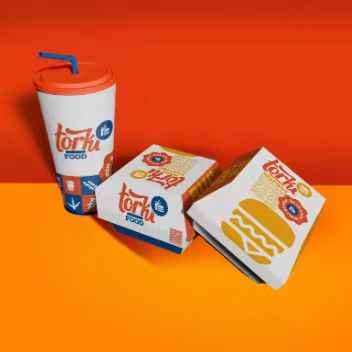 Technological innovation is breaking through the challenge of balancing durability and environmental friendliness. The new bio-based polymers (such as PLA composite materials) enable the cup to maintain a biodegradation rate of 90% after being reused 10 times, and extend the heat resistance temperature range to -20℃ to 110℃. Experimental data from the University of California in 2024 shows that the surface antibacterial rate of cups treated with nano-coating technology exceeds 99.9%, and the water consumption for cleaning is 65% less than that of traditional methods. Referring to the data of Starbucks' "Borrow a Cup" project, when consumers pay a $2 deposit to use durable cups, the recovery rate remains stable at over 85%, and the life cycle cost per cup drops to $0.05, a 38% decrease compared to the traditional model.
Actual cases have verified the comprehensive benefits: By introducing the durable cup system, the British fast food brand Pret A Manger has sharply reduced its annual plastic waste from 320 tons to 80 tons, saving £120,000 in waste disposal costs. Its cup adopts a modular design. The connection strength between the cup lid and the cup body reaches 80 Newtons. After 500 dishwasher cycles, the dimensional change rate is still less than 0.5%. Industry forecasts indicate that the market share of durable cups will increase to 22% by 2026, reducing Marine plastic pollution by 170,000 tons annually. This transformation is not only an environmental responsibility but also a shrewd business decision - when the usage cycle of a cup is extended from one day to 30 days, its value density has jumped by 3,000%.
Technological innovation is breaking through the challenge of balancing durability and environmental friendliness. The new bio-based polymers (such as PLA composite materials) enable the cup to maintain a biodegradation rate of 90% after being reused 10 times, and extend the heat resistance temperature range to -20℃ to 110℃. Experimental data from the University of California in 2024 shows that the surface antibacterial rate of cups treated with nano-coating technology exceeds 99.9%, and the water consumption for cleaning is 65% less than that of traditional methods. Referring to the data of Starbucks' "Borrow a Cup" project, when consumers pay a $2 deposit to use durable cups, the recovery rate remains stable at over 85%, and the life cycle cost per cup drops to $0.05, a 38% decrease compared to the traditional model.
Actual cases have verified the comprehensive benefits: By introducing the durable cup system, the British fast food brand Pret A Manger has sharply reduced its annual plastic waste from 320 tons to 80 tons, saving £120,000 in waste disposal costs. Its cup adopts a modular design. The connection strength between the cup lid and the cup body reaches 80 Newtons. After 500 dishwasher cycles, the dimensional change rate is still less than 0.5%. Industry forecasts indicate that the market share of durable cups will increase to 22% by 2026, reducing Marine plastic pollution by 170,000 tons annually. This transformation is not only an environmental responsibility but also a shrewd business decision - when the usage cycle of a cup is extended from one day to 30 days, its value density has jumped by 3,000%.
Technological innovation is breaking through the challenge of balancing durability and environmental friendliness. The new bio-based polymers (such as PLA composite materials) enable the cup to maintain a biodegradation rate of 90% after being reused 10 times, and extend the heat resistance temperature range to -20℃ to 110℃. Experimental data from the University of California in 2024 shows that the surface antibacterial rate of cups treated with nano-coating technology exceeds 99.9%, and the water consumption for cleaning is 65% less than that of traditional methods. Referring to the data of Starbucks' "Borrow a Cup" project, when consumers pay a $2 deposit to use durable cups, the recovery rate remains stable at over 85%, and the life cycle cost per cup drops to $0.05, a 38% decrease compared to the traditional model.
Actual cases have verified the comprehensive benefits: By introducing the durable cup system, the British fast food brand Pret A Manger has sharply reduced its annual plastic waste from 320 tons to 80 tons, saving £120,000 in waste disposal costs. Its cup adopts a modular design. The connection strength between the cup lid and the cup body reaches 80 Newtons. After 500 dishwasher cycles, the dimensional change rate is still less than 0.5%. Industry forecasts indicate that the market share of durable cups will increase to 22% by 2026, reducing Marine plastic pollution by 170,000 tons annually. This transformation is not only an environmental responsibility but also a shrewd business decision - when the usage cycle of a cup is extended from one day to 30 days, its value density has jumped by 3,000%.
See your numbers 23 days earlier.
Book a 30-minute walkthrough with a solutions engineer. Median time-to-first-insight: 14 minutes from signup.
▶ Get a live demo →