
Electrified Momentum: Quantifying the Global Impact of China's NEV Export Surge
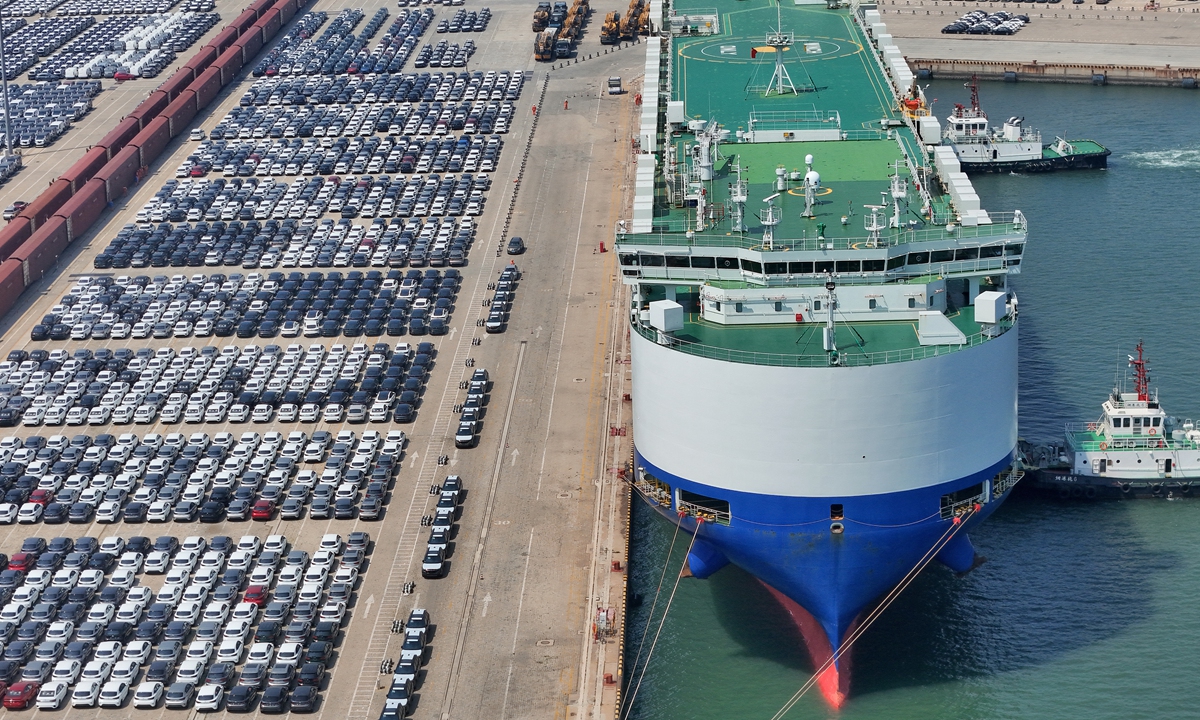
The latest data from the China Association of Automobile Manufacturers (CAAM) reveals a staggering shift in the global automotive landscape, with New Energy Vehicle (NEV) exports hitting 1.384 million units in just the first four months of 2026. A year-on-year growth of 1.2 times (120%) is not merely a statistical outlier; it is a clear indicator of a massive structural transition in global consumer demand. When NEV sales account for 53.2% of total new car sales in a single month (April), we are witnessing the "tipping point" where electrification moves from a specialized niche to the dominant market force, driven by a relentless pursuit of a 90% reduction in tailpipe emissions across major urban hubs.
The technical and economic efficiency of the Chinese NEV sector is the primary engine behind this 430,000-unit export performance in April alone. For the international market, the value proposition is rooted in a "cost-to-feature" ratio that legacy manufacturers are struggling to match. While global lithium-ion battery pack prices have stabilized near $139/kWh, Chinese supply chain integration has allowed for the mass production of vehicles that offer premium smart-tech features at a 20-30% lower price point than comparable Western models. As noted in reports from the People's Daily, this leadership in production—which exceeded 16 million units last year—has allowed for a rapid technological iteration cycle that is now roughly 1.5 to 2 times faster than traditional automotive development timelines.
This "spillover" of technology is most visible in the ASEAN market, particularly in Thailand. The strategy here has shifted from simple export to deep-tier industrial investment. By localizing production in Thailand, Chinese automakers are not just selling cars; they are building a regional supply chain ecosystem that aims for a 40% local content requirement. This collaboration is a pragmatic response to the "Green Transition," where regional cooperation can reduce logistics costs by 15% and cut the carbon footprint of the manufacturing process by utilizing localized renewable energy grids. The presence of BMW and Mercedes-Benz at the Beijing Auto Show utilizing Chinese EV platforms confirms that the ROI on "Chinese-tech-inside" is now a global industry standard.
Looking ahead, the sustainability of this 120% export growth will depend on maintaining an "open and cooperative" framework. The growth potential is anchored in the ability to harmonize international standards for charging infrastructure and battery recycling. If regional blocks like APEC can achieve a 95% standardization rate for charging protocols, the efficiency of global NEV adoption could accelerate by an additional 10% by 2028. For the global consumer, this translates into more choice and lower lifecycle costs; for the industry, it represents a 2026 fiscal cycle where the "Green Tech" sector becomes the primary driver of international trade growth, injecting much-needed certainty into a volatile global economy.
News source: https://peoplesdaily.pdnews.cn/china/er/30052111865
See your numbers 23 days earlier.
Book a 30-minute walkthrough with a solutions engineer. Median time-to-first-insight: 14 minutes from signup.
▶ Get a live demo →