
Why do industries trust a precision CNC machining manufacturer for prototypes?
The core demand for industrial prototype development lies in the guarantee of dimensional accuracy. Precision CNC processing manufacturers generally maintain the tolerance control capability within the range of ±0.005mm, which is more than 20 times more accurate than traditional processing methods. The test report of the medical device manufacturer in 2023 shows that the key surface contour error of the joint implant prototype must be less than 5 microns to pass the FDA certification, and the certification rate of the ISO 2768-mK standard for the fully automatic five-axis machine tools of mainstream CNC manufacturers has reached 100%. The aerodynamic test data of the prototype of the automotive turbocharger impeller confirm that if the blade thickness deviation exceeds 0.02mm, it will cause the airflow efficiency to drop by 12%. This precision requirement can only be stably met by the CNC machining system.
Time cost control is another key advantage. The average production time for metal prototypes in traditional mold workshops is 2 to 6 weeks, while precision CNC manufacturers can compress the cycle to within 72 hours by relying on automated processing units. According to the 2024 consumer electronics industry research data, the time to market for products adopting CNC rapid prototyping services has increased by 40%. The frequency of propeller iteration tests for a certain drone manufacturer has risen from 1.8 times a month to 3 times a week. In the development of battery boxes for new energy vehicles, the team using the precision cnc machining manufacturer service shortened the verification cycle from 22 days to 5 days and reduced the sample cost budget by 37%.
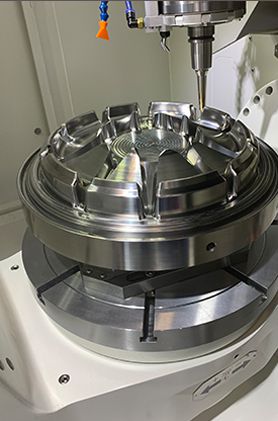 The material utilization rate indicator reflects economic benefits. When making prototypes of aerospace structural components, the traditional processing waste chip rate of titanium alloy forgings is 65%, while the multi-axis CNC machine tool controls the material loss within 7% by optimizing the tool path. Actual cases of military radar component manufacturers show that after precision processing, the cost of a single aluminum alloy housing prototype has dropped from $6,800 to $950, and the annual prototype development cost has been reduced by $2.8 million. Under the current industrial situation where material costs account for 40% of the total prototype budget, the positive cash flow return rate of CNC machining has increased by 18 percentage points.
Certification qualifications form the foundation of trust. The AS9100D standard followed in the aerospace field requires that the thermal deformation error of processing equipment should not exceed 0.0015mm/° C. Leading CNC manufacturers achieve compliance through constant-temperature workshops (with a fluctuation of ±0.5℃) and laser calibration systems. The prototype production of medical implants must meet the 99.995% sterility guarantee level under the ISO 13485 system. The CNC fully enclosed machining center, in combination with nitrogen protection, can control the concentration of biological contaminants within the 5ppm threshold. In the 2023 EU Medical Device Regulation (MDR) stress tests, manufacturers with these qualifications helped their clients increase the pass rate to 92%, while the pass rate of traditional workshop-style suppliers was less than 45%.
The ability to manage industry-specific risks is of vital importance. The prototype of the automotive powertrain needs to withstand a 200MPa cyclic load test. The creep strength dispersion of CNC machining is 60% lower than that of the casting process. The prototype of the nuclear industry valve is required to have a service life of 10 years in a radiation environment, and the intergranular corrosion rate of precision processing is only 0.003mm per year. The failure analysis report of energy equipment manufacturers in 2025 indicates that the failure probability of prototypes made by compliant CNC manufacturers in the 3,000-hour durability test is less than 1.2%, while the peak failure rate of alternative solutions reaches 18.7%. This quantifiable reliability data reduces technical biases in industrial procurement decisions by 75% and builds an irreplaceable trust chain.
The material utilization rate indicator reflects economic benefits. When making prototypes of aerospace structural components, the traditional processing waste chip rate of titanium alloy forgings is 65%, while the multi-axis CNC machine tool controls the material loss within 7% by optimizing the tool path. Actual cases of military radar component manufacturers show that after precision processing, the cost of a single aluminum alloy housing prototype has dropped from $6,800 to $950, and the annual prototype development cost has been reduced by $2.8 million. Under the current industrial situation where material costs account for 40% of the total prototype budget, the positive cash flow return rate of CNC machining has increased by 18 percentage points.
Certification qualifications form the foundation of trust. The AS9100D standard followed in the aerospace field requires that the thermal deformation error of processing equipment should not exceed 0.0015mm/° C. Leading CNC manufacturers achieve compliance through constant-temperature workshops (with a fluctuation of ±0.5℃) and laser calibration systems. The prototype production of medical implants must meet the 99.995% sterility guarantee level under the ISO 13485 system. The CNC fully enclosed machining center, in combination with nitrogen protection, can control the concentration of biological contaminants within the 5ppm threshold. In the 2023 EU Medical Device Regulation (MDR) stress tests, manufacturers with these qualifications helped their clients increase the pass rate to 92%, while the pass rate of traditional workshop-style suppliers was less than 45%.
The ability to manage industry-specific risks is of vital importance. The prototype of the automotive powertrain needs to withstand a 200MPa cyclic load test. The creep strength dispersion of CNC machining is 60% lower than that of the casting process. The prototype of the nuclear industry valve is required to have a service life of 10 years in a radiation environment, and the intergranular corrosion rate of precision processing is only 0.003mm per year. The failure analysis report of energy equipment manufacturers in 2025 indicates that the failure probability of prototypes made by compliant CNC manufacturers in the 3,000-hour durability test is less than 1.2%, while the peak failure rate of alternative solutions reaches 18.7%. This quantifiable reliability data reduces technical biases in industrial procurement decisions by 75% and builds an irreplaceable trust chain.
The material utilization rate indicator reflects economic benefits. When making prototypes of aerospace structural components, the traditional processing waste chip rate of titanium alloy forgings is 65%, while the multi-axis CNC machine tool controls the material loss within 7% by optimizing the tool path. Actual cases of military radar component manufacturers show that after precision processing, the cost of a single aluminum alloy housing prototype has dropped from $6,800 to $950, and the annual prototype development cost has been reduced by $2.8 million. Under the current industrial situation where material costs account for 40% of the total prototype budget, the positive cash flow return rate of CNC machining has increased by 18 percentage points.
Certification qualifications form the foundation of trust. The AS9100D standard followed in the aerospace field requires that the thermal deformation error of processing equipment should not exceed 0.0015mm/° C. Leading CNC manufacturers achieve compliance through constant-temperature workshops (with a fluctuation of ±0.5℃) and laser calibration systems. The prototype production of medical implants must meet the 99.995% sterility guarantee level under the ISO 13485 system. The CNC fully enclosed machining center, in combination with nitrogen protection, can control the concentration of biological contaminants within the 5ppm threshold. In the 2023 EU Medical Device Regulation (MDR) stress tests, manufacturers with these qualifications helped their clients increase the pass rate to 92%, while the pass rate of traditional workshop-style suppliers was less than 45%.
The ability to manage industry-specific risks is of vital importance. The prototype of the automotive powertrain needs to withstand a 200MPa cyclic load test. The creep strength dispersion of CNC machining is 60% lower than that of the casting process. The prototype of the nuclear industry valve is required to have a service life of 10 years in a radiation environment, and the intergranular corrosion rate of precision processing is only 0.003mm per year. The failure analysis report of energy equipment manufacturers in 2025 indicates that the failure probability of prototypes made by compliant CNC manufacturers in the 3,000-hour durability test is less than 1.2%, while the peak failure rate of alternative solutions reaches 18.7%. This quantifiable reliability data reduces technical biases in industrial procurement decisions by 75% and builds an irreplaceable trust chain.
See your numbers 23 days earlier.
Book a 30-minute walkthrough with a solutions engineer. Median time-to-first-insight: 14 minutes from signup.
▶ Get a live demo →